
THE REAL THING
On Cinema, the Colonization of Perception, and the System Operating as Designed

by Floyd Webb
“After all, I’m the real thing.” — Gwendolyn Brooks, The Life of Lincoln West
“Sad to see the old slave mill / Is grinding slow, but grinding still.” — Damian Marley, Slave Mill
I. THE UNREGISTERED DIFFERENCE
I never noticed the difference in skin tone between me and my younger sister.
Not as children. Not when we sat together. Not when I looked at her face across the table or walked beside her on the street.
It didn’t register.
Not because I couldn’t see. I could see. But the system that assigns meaning to what you see — that tells you which differences matter and in which direction they matter — had not yet finished its work on me. The conditioning was incomplete. And in that incompleteness there was something true. Something the system spends enormous resources destroying in every generation.
It didn’t register because it didn’t matter.
It only began to matter when other people made it matter. When the world outside our house — the glances, the comments, the comparisons, the cultural air we breathed — started installing the software. Started teaching us what to see and how to evaluate what we saw.
Our perception is conditioned by the people around us. By the system around us.
That is not a psychological observation. It is a political one.
Because if perception is conditioned — if what we see and what we make of what we see is taught rather than natural — then the most powerful thing any system of domination can do is control the curriculum.
And the most powerful thing any person can do is refuse the lesson.
— — —
II. THE CHILDREN IN LONDON
I was living in London. A friend of mine — a teacher, Caribbean, from Jamaica — invited me to visit her class.
The children were all from the West Indies. Newly arrived. Still carrying their first world with them.
I came for their art class.
What I saw stopped me.
Every child in that room was drawing with a confidence and a specificity that I had to stand still and look at twice. Flowers rendered with the precision of someone who had actually studied them in a specific light at a specific time of day. Beach scenes with the particular quality of Caribbean water — that color, that clarity — that you cannot invent if you have not seen it. Memories of home laid down on paper with the sureness of someone drawing from the inside of their own experience.
Not two or three exceptional children.
Every one.
I stood there and I thought about my own elementary school classroom in Chicago. Thirty children. The comic books we copied. The crime shows we tried to reproduce. The rushed scribblings that were already someone else’s visual language before we had fully arrived in our own. And yes — two or three pieces of work that stood out. Two or three children whose drawings had that same interior quality. That same sureness.
But only two or three.
I want to be honest about the judgment I’m making. I am not a trained art educator. I am a filmmaker and a curator with fifty years of looking at images and understanding what they carry and where they come from. That is the qualification I bring to this observation. Not credentials. Witness.
The difference between those Caribbean children and my Chicago classmates was not talent.
It was exposure time.
Those children had not yet been in the system long enough for it to replace their own visual world with its preferred imagery. They were still drawing from memory. From the specific, irreplaceable, interior memory of a world that belonged to them — its light, its color, its particular flowers, its water that looked like that and not like anything else.
My Chicago classmates were drawing from a curriculum.
The system does not destroy Black creative capacity. It replaces the interior with the exterior. It substitutes someone else’s imagery for your own memory. It teaches you to draw from the outside in rather than the inside out.
Two or three children in that Chicago classroom had held onto something. Had kept some thread of connection to their own interior visual world. The rest had been processed.
Not because they were less gifted. Because they had been in the system longer.
Those Caribbean children in London were a few months from the same processing. In a year those drawings would begin to look different. In five years you might find two or three exceptional ones among the thirty.
The system is patient.
It does not need to destroy what it can simply replace.
— — —
III. THE REAL THING
Gwendolyn Brooks wrote a poem about a boy named Lincoln West.
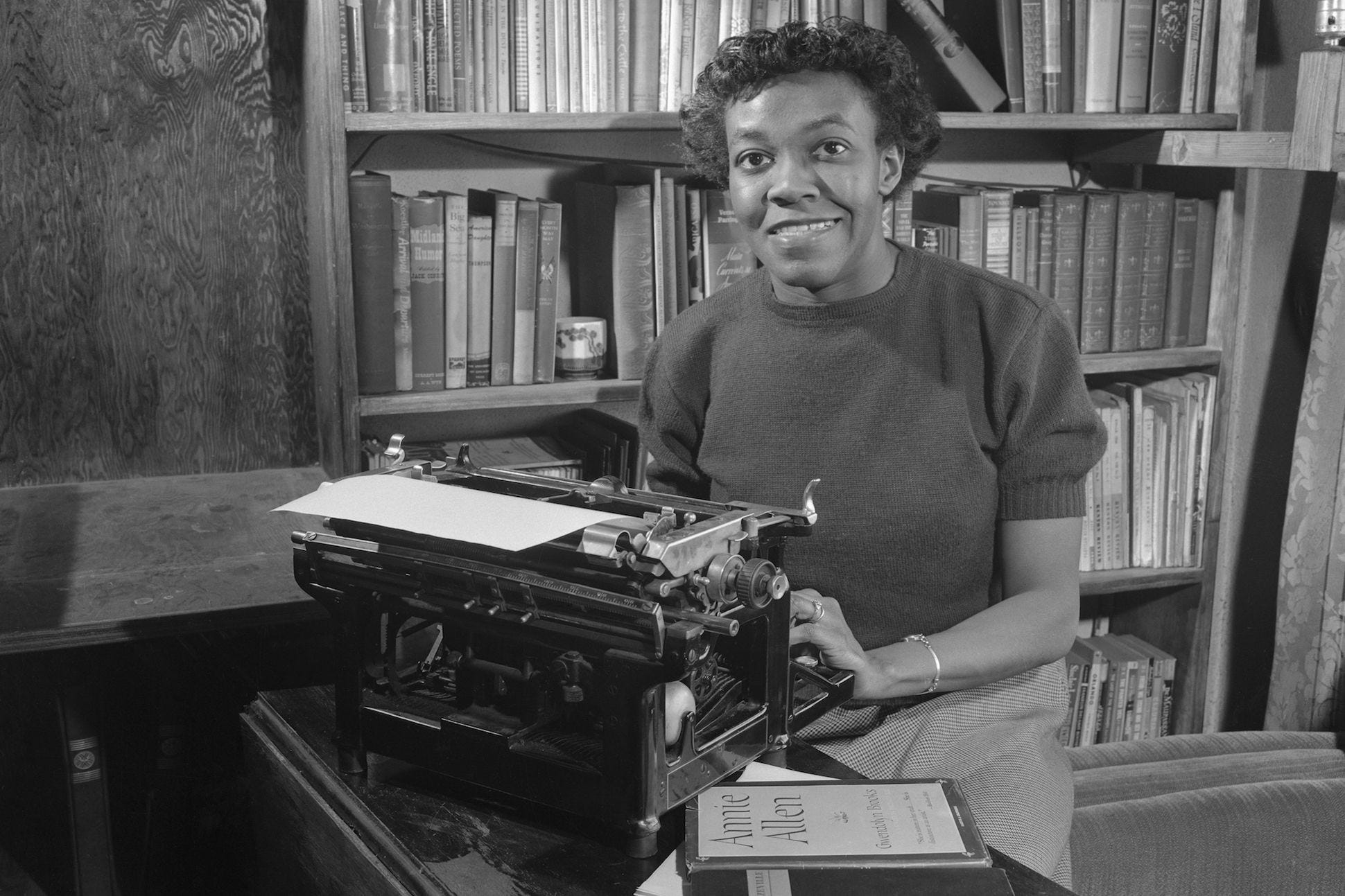
He was considered the ugliest child anyone had ever seen. Dark-skinned. Large-featured. Rejected by his father from birth. Managed at arm’s length by everyone who encountered him.
One day in a movie theater a white man pointed at him and said to his companion: Black, ugly, and odd. You can see the savagery. The blunt blankness. That is the real thing.
The man meant it as a zoological observation. A specimen. Something primitive and authentic in the way a zoo animal is authentic. Something that confirmed what the white gaze needed confirmed — that darkness itself was a kind of evidence.
Lincoln’s mother grabbed him and left.
But all the way home Lincoln was happy.
He had not liked the word ugly. He was used to ugly. What struck him — among words and meanings he could only partially understand — was the phrase the real thing. He didn’t know quite why but he liked that very much.
He told himself: After all, I’m the real thing.
It comforted him.
Brooks understood something in that moment that Hollywood has spent a hundred and thirty years refusing to understand. The white man’s gaze intended degradation. But Lincoln West took the only word in that sentence that pointed toward his irreducible human presence — real — and made it his.
The real thing. He was.
Now look at Precious.
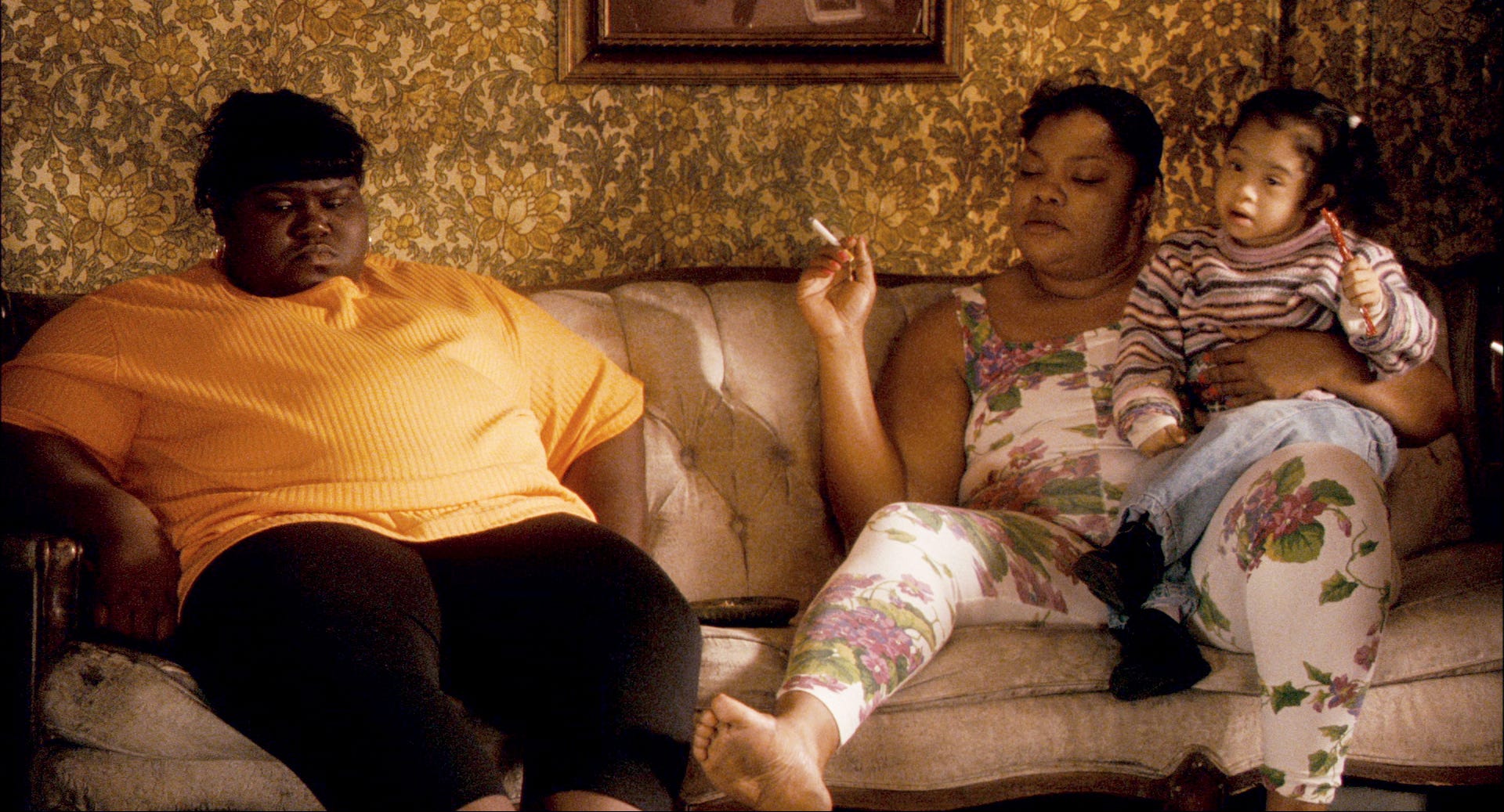
The 2009 film about a dark-skinned, obese Black girl in Harlem — abused, illiterate, pregnant twice by her father, HIV positive, isolated in a family the film renders as the source of all her suffering rather than as people also destroyed by a system neither they nor she designed.
The film won awards. It was celebrated as unflinching. As courageous. As a revelation of hidden Black life.
But look at what it is in the genealogy of American cinema.
The white gaze arrives at the dark Black body and sees the real thing. The savagery. The blunt blankness. Rendered now not in crude caricature but in the sophisticated language of social realism. In the close-up that lingers on suffering. In the fantasy sequences where Precious imagines herself light-skinned and desired — the film’s own acknowledgment that darkness is the condition to be escaped rather than the inheritance to be claimed.
The chicken thief in the Edison short of 1904 made you laugh at the dark Black body.
Precious makes you cry at it.
The ideological function is identical. The dark Black body as the site where the white gaze comes to feel something about itself. To feel its own compassion. Its own civilization confirmed by the darkness it is observing.
Brooks gave Lincoln West his interiority. His act of self-naming. His reclamation of the gaze turned against him.
The film gives Precious her suffering in extreme close-up.
And calls it empathy.
— — —
IV. THE SYSTEM NAMING ITSELF
American cinema was not born neutral and then corrupted.
It was born with an argument already made.
Before there were feature films. Before there were movie palaces or studio systems or awards ceremonies. Before there was Hollywood at all — there were the Edison shorts. Small flickering experiments in the new technology of moving images. And among the first things those images chose to show was the Black body being ridiculous.
Watermelon Contest — 1896.
Chicken Thieves — 1897.
Nigger in the Woodpile — 1904.
These were not aberrations. They were the mainstream. They were what the medium reached for in its first moments of self-definition.
And they did not emerge from nowhere. They were transcriptions.
The racist postcard industry of the post-Reconstruction era had already established a visual grammar of Black degradation — the watermelon, the chicken, the razor, the shuffling body, the rolling eyes — and the Edison camera simply picked up that grammar and put it in motion.
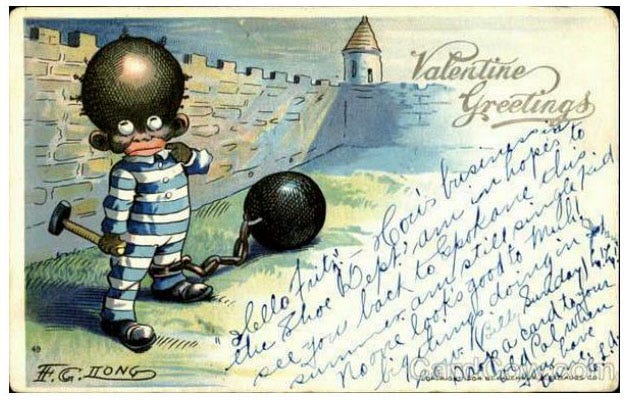
Post-Reconstruction is the essential context. After 1877 the federal government withdrew from the South and abandoned Black Americans to the former Confederate states. The brief extraordinary experiment of Reconstruction — Black congressmen, Black sheriffs, Black landowners, Black political participation at every level — was being violently dismantled. Lynching was industrializing.
The degradation of the Black image was not incidental to that project. It was the project’s cultural arm. You cannot re-subjugate a people whose full humanity is visible and acknowledged. You must first establish in the public mind that their humanity is in question.
Then came D.W. Griffith. The Birth of a Nation — 1915.
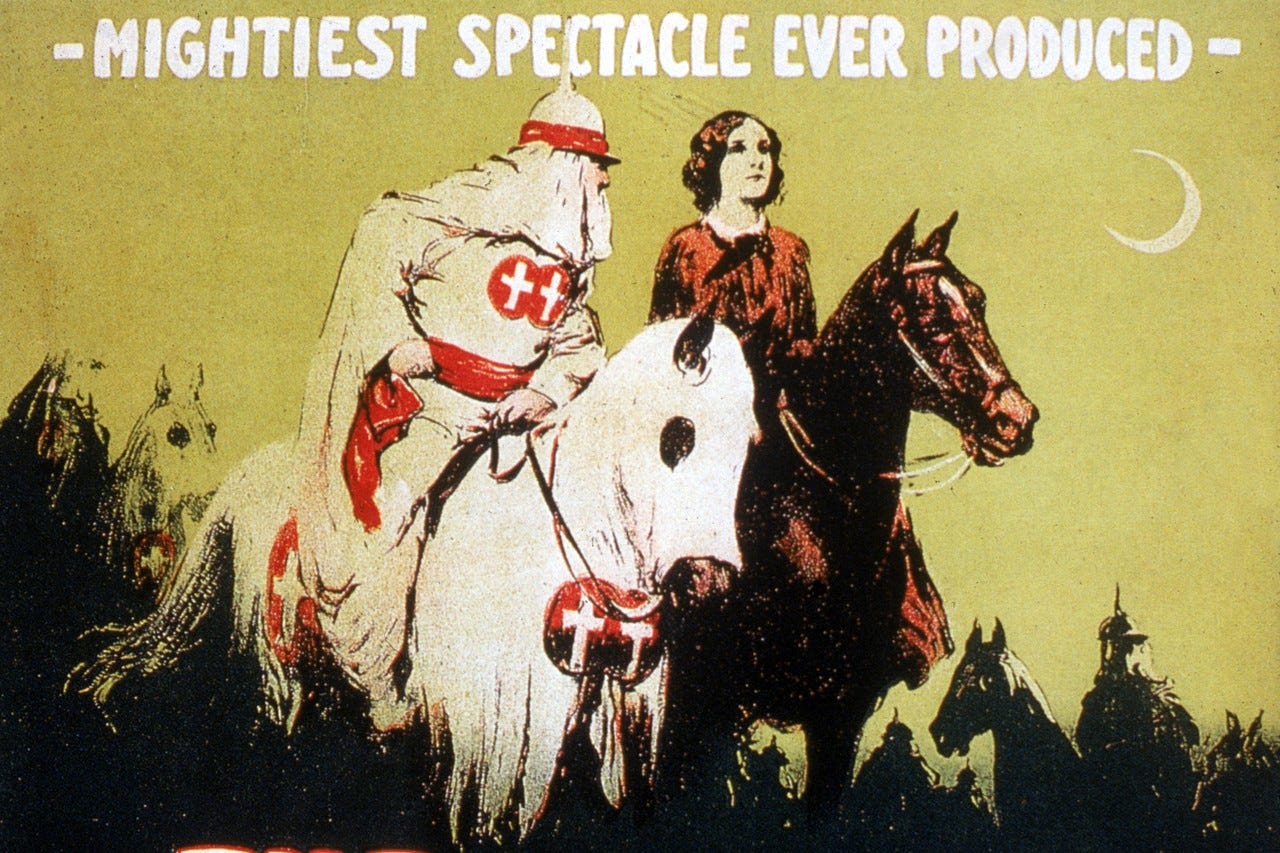
To understand what Griffith did you have to hold two things simultaneously. He was a formal genius. He invented or perfected techniques that define cinematic language to this day — the close-up as emotional intensifier, cross-cutting as narrative engine, camera movement as expressive instrument. And he used every one of those innovations in the service of a single argument.
The Reconstruction era was a catastrophe. The Ku Klux Klan were heroes. White womanhood was the value being protected. Black male sexuality was the threat.
Woodrow Wilson screened it in the White House. The Klan, which had been in decline, revived. Within a decade its membership reached four million.
Griffith did not make a racist film within an otherwise neutral medium. He built the medium’s formal language and the racial ideology simultaneously. They are fused at the root. You cannot separate the close-up from Birth of a Nation. You cannot separate the grammar from the argument it was built to make.
The system had produced the degraded image. Now it needed to prohibit the undegraded one.

Sessue Hayakawa arrived in Hollywood around 1914. A Japanese actor of commanding screen presence. His 1915 film The Cheat was a sensation. Women of all races responded to him. His stardom proved that desire does not naturally organize itself along racial lines. That the hierarchy of attractiveness and desirability that white supremacy required was not a natural order. It was an enforced one.
The system did not eliminate the desire. It redirected it toward a racially acceptable object. Rudolph Valentino. Sufficiently exotic to carry the erotic charge. But European. White enough to be ultimately safe.
The racial order does not only produce. It redirects. It takes what it cannot eliminate and routes it through channels it can control.
Desire for the non-white body — redirect to the acceptable exotic.
Black radical political energy — redirect to the electoral coalition.
Black mythological imagination — redirect to the European vampire.
The mechanism is the same across every system. The energy is real. The redirection is the management.
In 1930 the Motion Picture Producers and Distributors of America adopted the Production Code. In 1934 it began to be enforced with the full institutional weight of the industry.
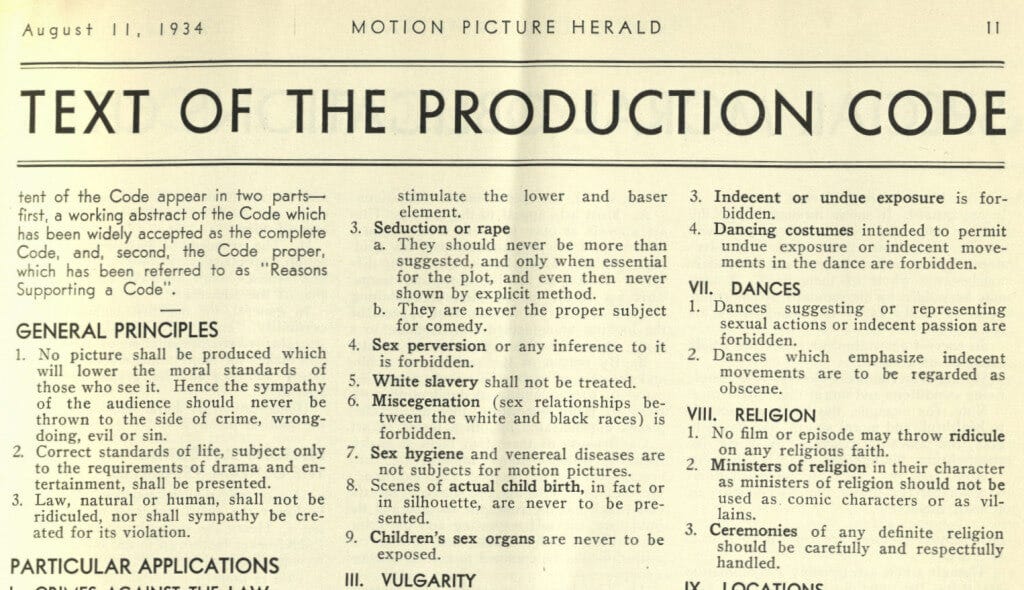
The Hays Code explicitly prohibited the depiction of miscegenation. Sex relationships between the white and black races — forbidden. Not restricted. Forbidden.
It required that any Black character who challenged the social order — who fought back, who desired, who built something, who refused — had to be punished by the narrative before the film ended. Had to confirm in their defeat that the order was right and natural and not to be questioned.
The Code was enforced until 1968. Thirty-four years of mandatory racial management built into the production process of every Hollywood film.
A grammar. A set of expectations so thoroughly internalized — by writers, directors, producers, actors, and audiences — that the racial hierarchy stopped needing to be argued and started simply being the shape of the world as cinema presented it.
The Hays Code ended.
The grammar it produced did not.
The grammar is still running.
The system is operating as designed.
— — —
V. THE VISIONARY AND THE HARVEST
The system does not only operate on films.
It operates on the people who make them.
And the pattern it produces is consistent enough across decades and across gender and across every available strategy for navigating its terms that it cannot be called coincidence.
It can only be called design.
Wesley Snipes
Wesley Snipes understood Wakanda before the technology existed to build it.
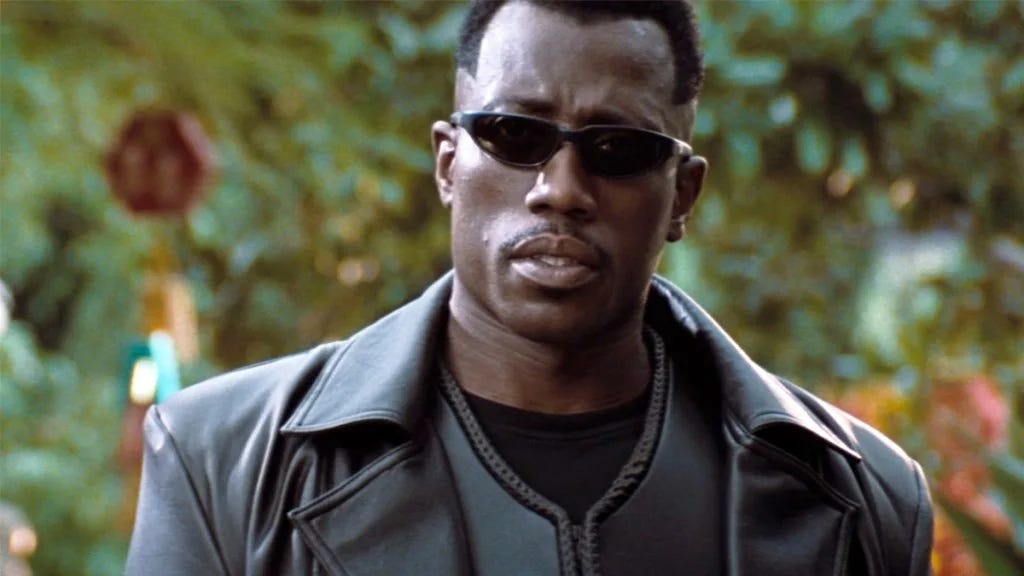
In the early 1990s he was trying to make Black Panther. Not the film Disney eventually made. The comic-accurate African sci-fi epic, the Pan-African counter-factual, Wakanda rendered with the technological majesty the story demanded. He refused to make a compromised version. He held the vision with the stubbornness of someone who understood what was actually at stake in that image.
The CGI didn’t exist yet. The studio system couldn’t see the market. The project stalled.
So Snipes pivoted to Blade.
What he built with Blade in 1998 — through his production company Amen Ra Films, on a $45 million budget — was the proof of concept that saved Marvel as a commercial property. Blade grossed $131 million worldwide. Without Blade there is no X-Men. Without X-Men there is no Spider-Man. Without Spider-Man there is no Marvel Cinematic Universe. Without the MCU there is no billion-dollar Disney acquisition. Without that acquisition there is no Black Panther — the film Snipes had been trying to make for a decade before Blade existed.
He is the founding act of the most lucrative franchise in cinema history.
The Blade trilogy grossed over $400 million worldwide. Snipes and Amen Ra Films earned an estimated $30 to $40 million from films that built an empire worth billions.
He did not own the IP. He did not have equity in what grew from the foundation he laid. He had a salary. A good salary. Not ownership. Not the compounding institutional power that comes from equity in a franchise at the moment of its greatest value.
The distinction between salary and equity is where the containment operates. Hollywood has always been willing to pay Black talent. It has not been willing to share ownership with Black talent. The money flows. The power doesn’t.
By the time the MCU was generating billions — by the time Black Panther was being made with a vision that Snipes had conceived thirty years earlier — Snipes was in prison.
Federal tax evasion. The IRS had been pursuing him for liability that accumulated during the Blade years. He was convicted in 2008 and began serving his sentence in 2010.
The Avengers — the film that industrialized everything Blade had made possible — came out in 2012.
Hollywood is a tax avoidance industry. Its wealthiest participants employ armies of accountants and lawyers to minimize their exposure through mechanisms far more sophisticated than anything Snipes used. The system routinely accommodates this for its most valued participants.
Snipes had become a problem. His leverage was diminishing. His IRS liability — accumulating throughout the Blade years — became the instrument of his removal from the table at the precise moment when the franchise he had built was about to be harvested at scale.
The timing is not conspiracy.
It is the system operating as designed.
The vision was used. The visionary was not invited to benefit from what grew from it. And Black Panther — when it was finally made with the technology and budget and cultural moment Snipes had always insisted the story required — had Killmonger pre-compromised, the CIA agent saved, and the Lumumba counter-factual resolved as philanthropy.
The vision arrived. Thirty years late. On the system’s terms. With the third act already written.
Julie Dash
Julie Dash understood something different.
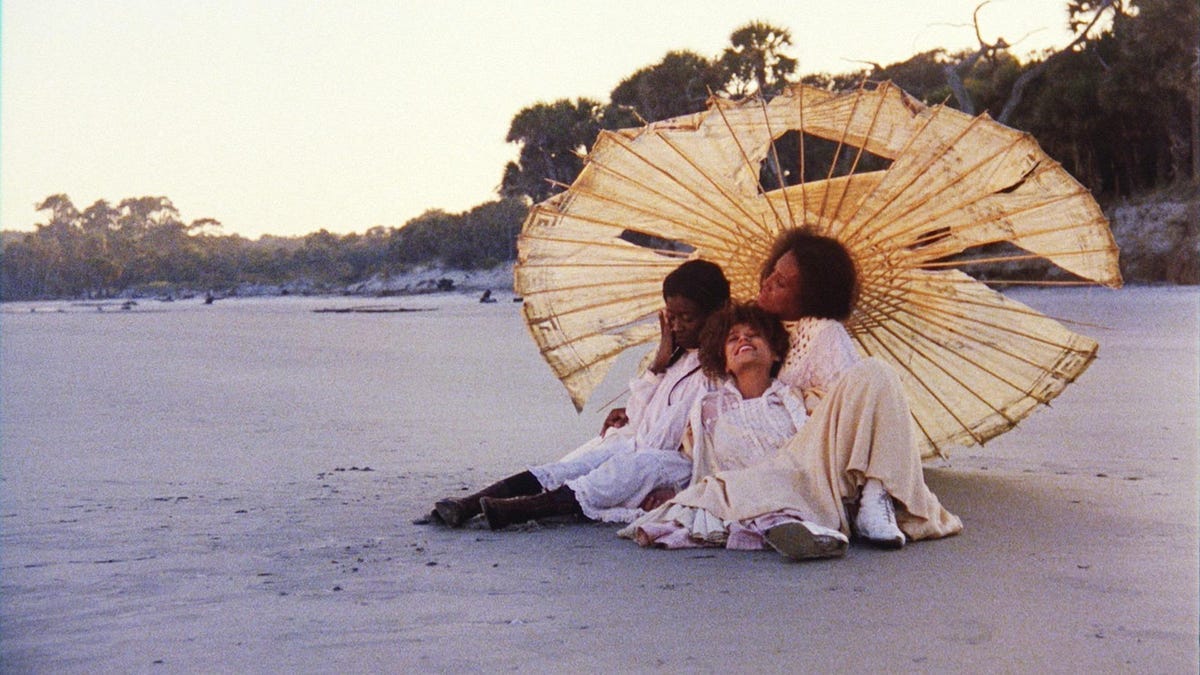
She understood that the only way to tell certain stories was to build outside the system entirely. Not to navigate it. Not to find the crack in institutional desperation. To build a different structure altogether.
Daughters of the Dust — 1991. The Gullah women of the Sea Islands at the turn of the twentieth century. Afrocentric visual language. Non-linear time. The spiritual world and the material world occupying the same frame with equal weight. The specific interior life of a specific people rendered from the inside with no concession to the external gaze that needed to be told what it was looking at.
Dash spent ten years making it. Grassroots financing. Grant money. The specific grinding labor of building a film outside the system that would have required her to compromise every element that made the film what it was.
When it was finished the system didn’t know what to do with it. Not because it wasn’t extraordinary. Because it was too specific. Too interior. Too rooted in a cultural and spiritual tradition that the classification system capital uses to sell cinema couldn’t reduce to a marketable category.
It found its audience anyway. Festival screenings. Community screenings. Word of mouth through the Black diaspora networks that the system doesn’t control and doesn’t fully understand.
Twenty-five years later Beyoncé made Lemonade.
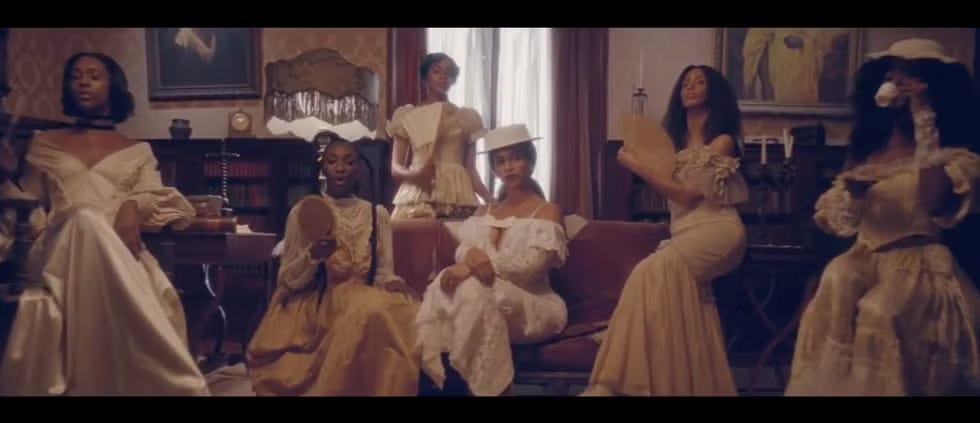
The visual language of Daughters of the Dust was everywhere in it. The Gullah imagery. The relationship between the spiritual and the material. The specific rendering of Black Southern womanhood from the inside.
The debt was not initially credited. When the connection was finally acknowledged it was framed as influence and homage rather than what it actually was.
Foundation.
Daughters of the Dust was the foundation of one of the most celebrated visual works of the twenty-first century. Dash did not benefit from what grew from it at scale.
Hollywood offered her television. Offers that came with the implicit condition that the specific interior vision that made her work worth making would need to be adjusted for the system’s preferred grammar.
The system absorbs Black creative vision as influence. It does not convert influence into equity. It does not convert influence into access to the conditions required to build the next work at the scale the vision demands.
The containment is not crude. It is structural.
Ava DuVernay
Ava DuVernay has navigated the Hollywood system more successfully than almost any Black filmmaker of her generation.
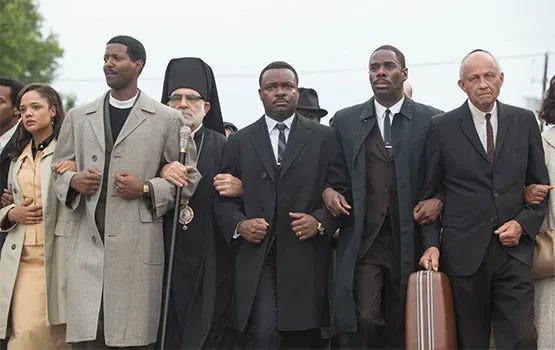
Selma. 13th. When They See Us. The Array distribution company she built specifically to circulate films the system wouldn’t touch — to create the infrastructure that could hold work the existing infrastructure refused to hold.
She has operated at the highest levels of the industry while maintaining enough independence to make work that matters. That navigation is a specific and hard-won skill. It is not compromise in the simple sense. It is the sophisticated management of institutional relationships while protecting the interior of the work.
And then she decided to make Caste.
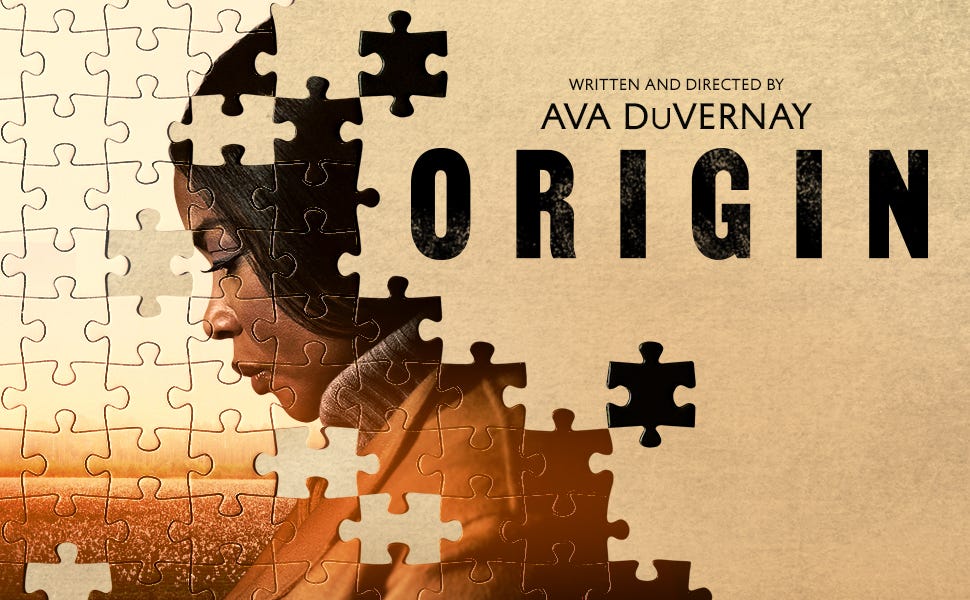
Isabel Wilkerson’s 2020 book — one of the most important analyses of American racial hierarchy published in a generation. Not a history of slavery. Not a collection of stories about individual racism. A structural argument. The racial order as a caste system — designed, maintained, self-correcting, operating across culture, politics, law, and capital simultaneously. The architecture named. The maintenance systems documented. The designed quality of the whole apparatus made undeniable.
DuVernay took that book to Hollywood.
No studio would back it.
Not because the book wasn’t important. Because of what the book argues. A film that dramatizes Caste compellingly is a film that makes the argument the system cannot afford to have made compellingly. It names the architecture. It says the system is not a collection of individual failures or unconscious biases or historical accidents. It is designed. It operates as designed.
That film could not be financed inside the system the film is about.
So DuVernay built the conditions herself. An Oprah Winfrey partnership. Independent financing. Outside the studio system. The same grassroots logic Julie Dash had used thirty years earlier — not because DuVernay lacked the connections or the track record to command studio attention but because the studio system had made its answer clear.
The wall is always in the same place. The system will permit Black excellence in forms it can manage. It will not finance the film that names its own architecture.
Caste names the architecture.
The studios said no.
DuVernay built the conditions and made it anyway.
That is not a failure of the system.
That is the system operating exactly as designed.
Three filmmakers. Three decades. Three different strategies for navigating the same architecture.
Snipes built the foundation from inside and was separated from the harvest.
Dash built outside from the beginning and watched her vision become the foundation for someone else’s harvest.
DuVernay navigated the inside with more success than almost anyone and hit the absolute wall at the precise point where the work would name the system itself.
The wall is always in the same place.
Because the wall is the system.
And the system is operating as designed.
— — —
VI. REPOSSESSING THE IMAGE
In 1982 a filmmaker from Burkina Faso named Gaston Kaboré made a film called Wend Kuuni — God’s Gift.

It was only the second feature film ever made in his country.
Before he became a filmmaker Kaboré was a historian. His master’s thesis at the Sorbonne was on the representation of Africa in the French illustrated press of the late 19th century. Sitting in Paris reading those images — the savage, the exotic, the primitive, the body that needed to be civilized — he understood something about power that the thesis could not fully contain.
He said: I wanted to learn the language of moving pictures to be able to use cinema in history. But also to reportray. To repossess my continent through images.
Repossess. The word names exactly what the Edison shorts, what Griffith, what the Hays Code had done. Taken possession of the Black and African image. Installed their own meaning inside it. Made that meaning feel natural, inevitable, simply the way things were.
Kaboré understood that repossession was not just a political act. It was a formal one. You could not repossess the image by telling African stories inside Hollywood’s grammar. The grammar itself was the possession. To repossess the image you needed a different grammar.
So Kaboré went back before the colonial image arrived. He went to Mossi folklore. To the oral tradition of his people. To the spoken rhythms and the non-linear structure and the communal relationship to storytelling that had existed in that part of West Africa long before a French press photographer arrived to document its supposed primitiveness.
And from that tradition he built Wend Kuuni.
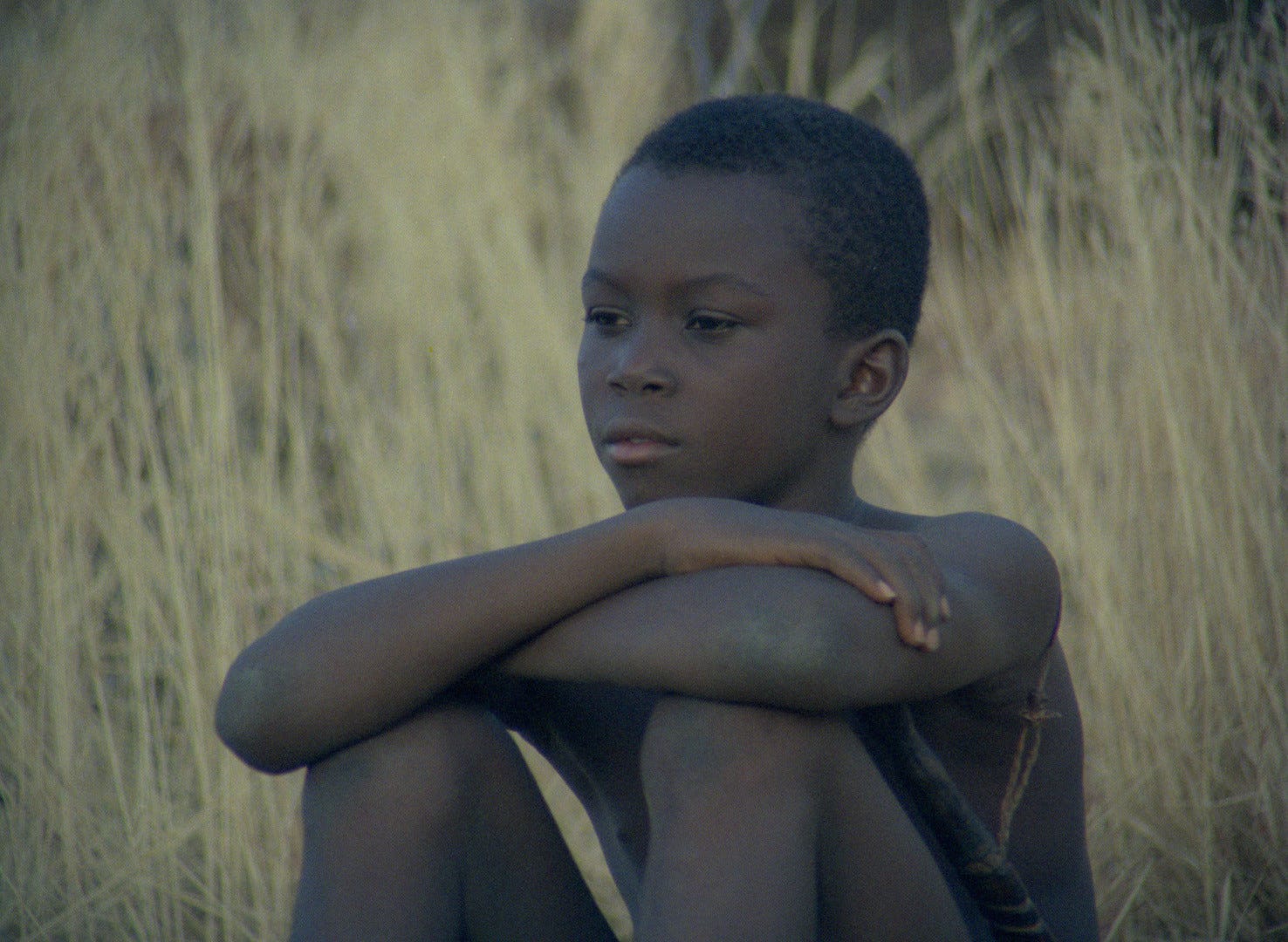
The film is set in pre-colonial Africa. The Mossi Kingdom. A traveling trader crossing the savanna finds a small boy lying unconscious in the bush. He takes him to the nearest village. The boy cannot speak. The village takes him in.
This is the first thing the film does that Hollywood cannot do.
It does not explain the village’s generosity. The village simply responds to a child in need with the reflexive collective care of a community whose social organization assumes that responsibility.
The boy is given a name. Wend Kuuni. God’s Gift. He is given a family. An adoptive sister — headstrong, curious, his fiercest advocate — with whom he forms the film’s emotional center.
The film portrays pre-colonial African life as fully human without requiring suffering to establish that humanity. Without pathology. Without the white gaze arriving to confirm or deny what it sees.
The measured rhythms the critics noted as unusual were not a stylistic choice. They were the oral tradition’s grammar made visual. They were what cinema looks like when it is built from the inside out rather than the outside in.
They were what the Caribbean children in London were doing when they drew their flowers and their water from memory.
They were what you and your sister had before the system arrived to make the difference between your arms mean something.
The real thing. Ungoverned. Unmanaged. Drawn from the specific interior world of a specific people who had not yet been told that their world was not worth seeing.
Wend Kuuni is available on Kanopy — free through most public library systems.
— — —
VII. THE TRADITION OF REFUSAL
The system does not need to hurry.
It has been running for centuries. It knows how to wait.
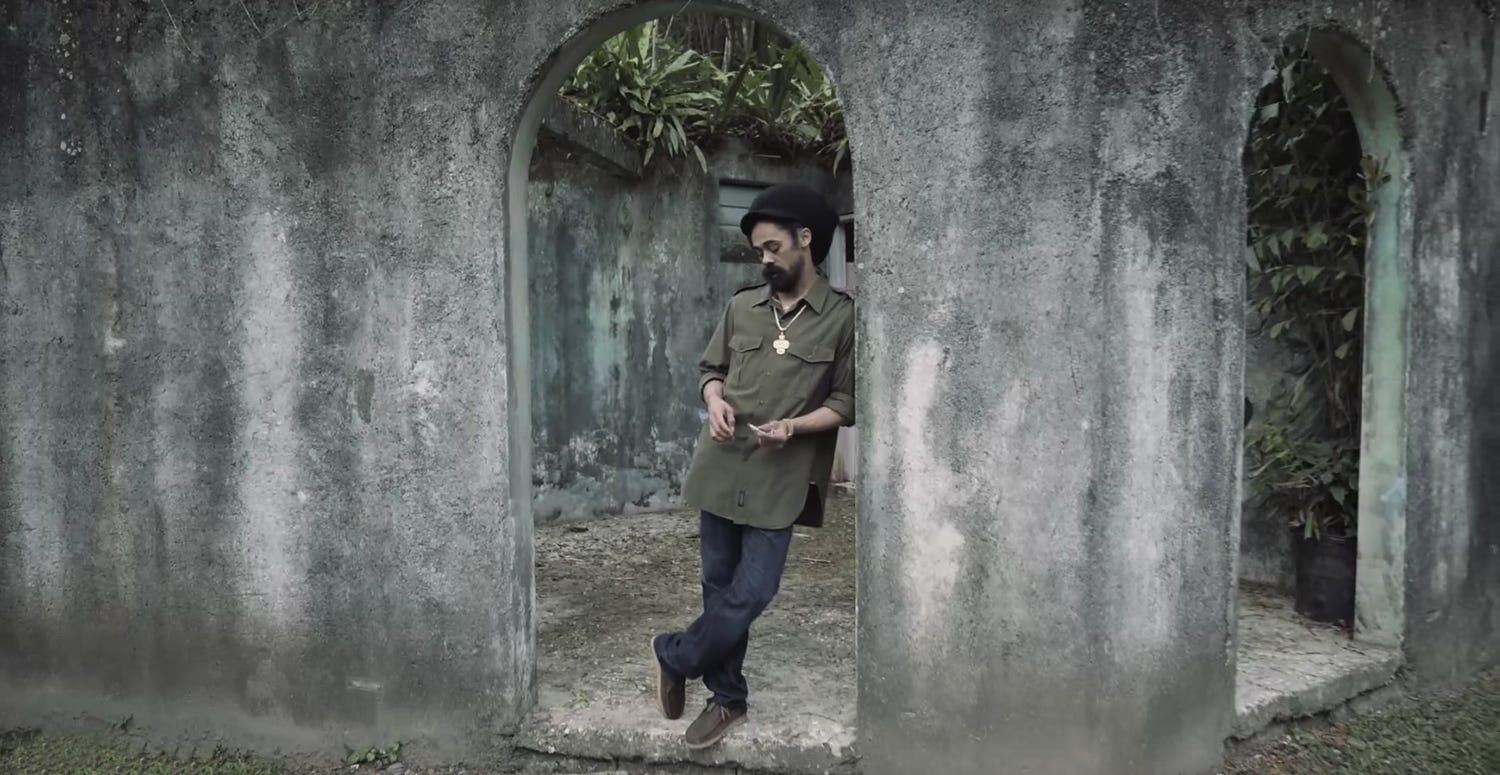
Damian Marley — Junior Gong, carrying the Rastafari analytical tradition from Garvey through his father into the present — named this with the precision that only comes from being born inside the mechanism and watching it operate on everyone you love.
What you won’t and what you will
Working for your dollar bill
Sad to see the old slave mill
Is grinding slow, but grinding still
The song is called Slave Mill.
Not metaphorically. The mill that ground enslaved bodies into wealth. That ground the plantation into the factory into the prison into the gig economy. That ground the chicken thief postcard into the Edison short into Birth of a Nation into the Hays Code into Precious into the awards season that ranks the autobiography below the spectacle.
Grinding slow. But grinding still.
The sadness in that line is the witness’s emotion. Not rage — though the rage is underneath it — but the specific grief of someone who sees the mechanism clearly and knows that seeing it clearly does not stop it from turning.
The refusal to call the mill something else.
And that refusal has a cost.
The system does not simply fail to reward resistance. It extracts payment from those who refuse its terms. Through the accumulated psychological weight of being a specific kind of person in a society organized to deny your full humanity. Through the loneliness of seeing clearly what others need not to see. Through the mental health costs of sustained resistance inside a system of white supremacy and exclusion.
I speak of what follows from personal knowledge of these figures and their lives. I will not specify which demons belonged to whom. That is not mine to say publicly. What I will say is that the depression was real. The mental health struggles were real. The cost was paid in full by people who kept working anyway.
When iron is forged the impurities are driven out as slag. The waste product of a process that produces something extraordinarily strong. The slag from iron personalities forged in a system of white supremacy, exclusion, and racism. That is not weakness. That is the system’s bill, presented and paid.
I do not want to romanticize these people. I want to praise them for surviving. For thriving in spite of the full weight of the system against them. And I want to name the system as the source of the demons.
The system. Operating as designed.
James Baldwin
James Baldwin looked at himself. Not with the system’s eyes. With his own.
What he saw was a dark-skinned Black man from Harlem who desired men. Who carried the full weight of American racial history in his body and his consciousness and his prose. Who refused to simplify any of it into something the culture could manage.
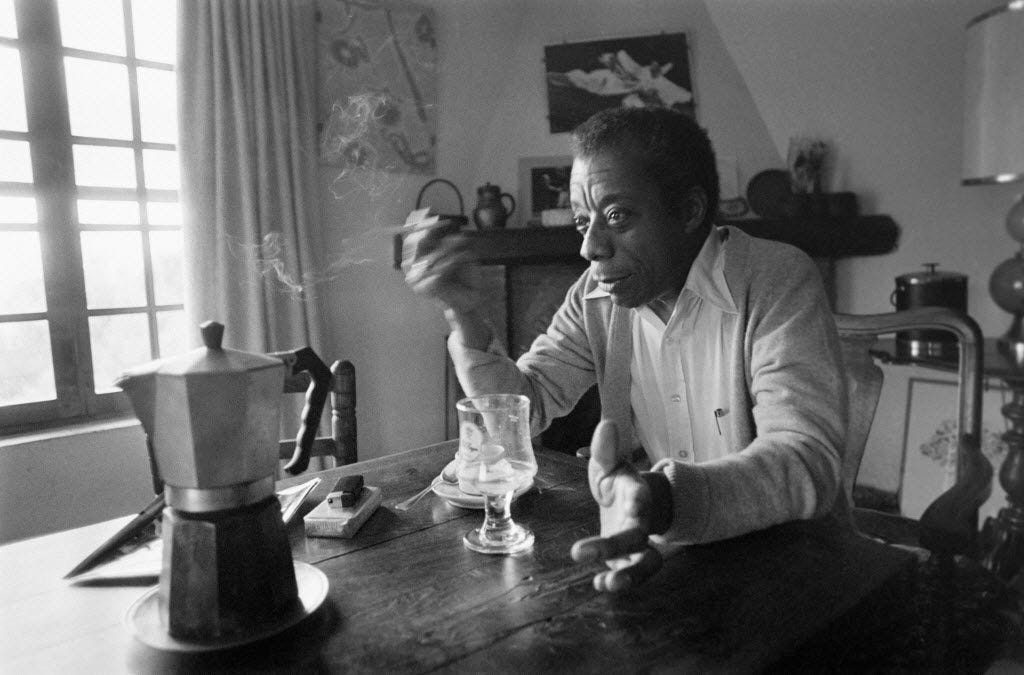
The system needed Baldwin to be one thing at a time. A civil rights spokesman. Or a gay writer. Or an expatriate. One thing. Legible. Classifiable. Containable.
Baldwin refused every reduction.
Giovanni’s Room — 1956. No Black characters. A white American man in Paris consumed by desire for an Italian man. Baldwin writing across every boundary the system had drawn around what a Black writer was permitted to write about — claiming the full territory of human experience as his subject.
The Fire Next Time. Notes of a Native Son. Nobody Knows My Name. No Name in the Street.
Each title a refusal. I am not the name you gave me. I am not the image you made of me.
He said that on television. He said it to William F. Buckley at Cambridge in 1965 with the precision and fury of a man who had been studying the evidence his entire life.
And he carried the weight of all of it. The clarity did not come free. Long dark periods that the work does not erase and that the celebration of the work consistently fails to acknowledge.
He kept working anyway. The system managed his legacy after his death. Made him safe enough for high school curricula.
But the books exist. The essays exist. The Cambridge debate exists on tape. The full interior. Ungoverned. Preserved.
The real thing.
Nina Simone
Nina Simone looked at herself.
She was dark. Her features were African in the way that American beauty culture could not accommodate. She applied to the Curtis Institute of Music in Philadelphia with extraordinary ability. She believed for the rest of her life that race was the reason she was denied.
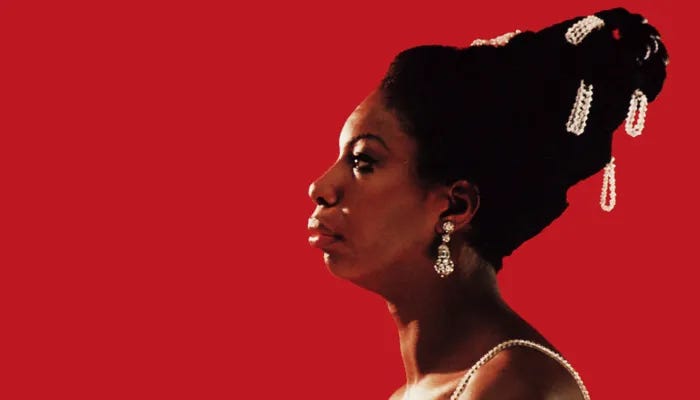
She could have made herself smaller. She did the opposite.
Four Women — 1966. Four Black women rendered from the inside. Whose conditions were not self-generated but systemically produced. The song was banned by several radio stations for being too inflammatory. What was inflammatory was not the anger. It was the interiority.
Mississippi Goddam — written in one hour after the 1963 Birmingham church bombing that killed four little girls. The composed fury of a woman who had been watching the evidence accumulate her entire life.
She wore her hair natural before it was a movement. She wore her features like an argument.
And she paid. The mental health costs were real and documented and the system that produced her conditions was never held accountable for what it extracted from her.
She kept performing. Kept recording. Kept refusing. The system licensed her recordings for advertisements after her death. Managed the fury into soundtrack.
But the recordings exist. The 1976 Montreux footage exists — a woman at a piano who has paid every bill the system presented and is still there, still playing, still the most specific and uncontainable version of herself in the room.
The real thing.
Paul Robeson
Paul Robeson looked at himself and saw what America needed not to see.

A dark-skinned Black man of massive physical presence and African features that the Hollywood beauty architecture had no framework to accommodate as fully human and fully powerful simultaneously.
He worked briefly in Hollywood. Briefly because Hollywood could not hold what he actually was without requiring him to perform a diminished version of it.
So he went to Oscar Micheaux. Micheaux had understood before almost anyone that the only way to make films about Black people from the inside was to own the means of making and distributing them. Working with Micheaux was Robeson choosing the infrastructure that could hold him rather than the one that needed to manage him.
Then Europe. Switzerland first. Then England where he became what he actually was at full scale — a baritone of global stature, a Shakespearean actor whose Othello on the London stage was not a Black man performing for a white audience’s confirmation but a man claiming his full artistic inheritance.
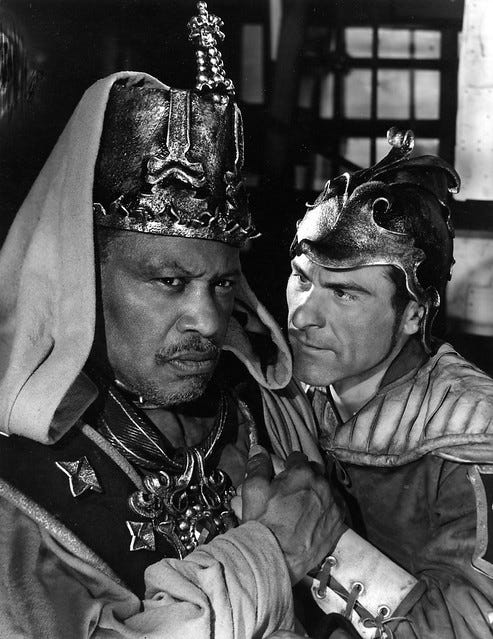
He sang Ol’ Man River and changed the lyrics as his politics deepened — changing I’m tired of living and scared of dying to I must keep fighting until I’m dying — because the song belonged to him and the interior world it came from was his to navigate.
He stood with the Welsh miners. Understood in his body what Fred Hampton would understand from the factory floor in Maywood decades later — that the mill grinds working people regardless of the color of the body it is grinding.
He went to Spain during the Civil War and sang for the International Brigades. He said what he saw. Publicly. Consistently.
The system responded. In 1950 the State Department revoked his passport. For eight years Robeson — one of the most celebrated performers in the world — could not leave the United States. His recordings were pulled from circulation. His name was removed from athletic records at Rutgers.
These are the necropolitical operations performed on the living rather than the dead. Not who dies and what their death means. Who is silenced and what their silence is made to mean.
His passport was restored in 1958. He kept working until his body could no longer sustain it. He died in 1976.
The Welsh valleys remembered him. The Paul Robeson Cymru Foundation carries his name to this day. His voice survived — the specific baritone that carried both the American folk tradition and the international workers’ movement in the same instrument.
He is the proof that leaving the Hollywood system is not defeat. It is sometimes the condition of becoming fully yourself.
The real thing.
Verta Mae Grosvenor
Verta Mae Grosvenor looked at her kitchen.
In 1970 she published Vibration Cooking, or The Travel Notes of a Geechee Girl. A cookbook that was not a cookbook. A memoir that was not a memoir. A cultural manifesto delivered through recipes and memories and the specific sensory knowledge of a Gullah woman who had grown up in South Carolina and moved to New York and cooked with the confident imprecision of someone who learned from watching rather than from measuring.
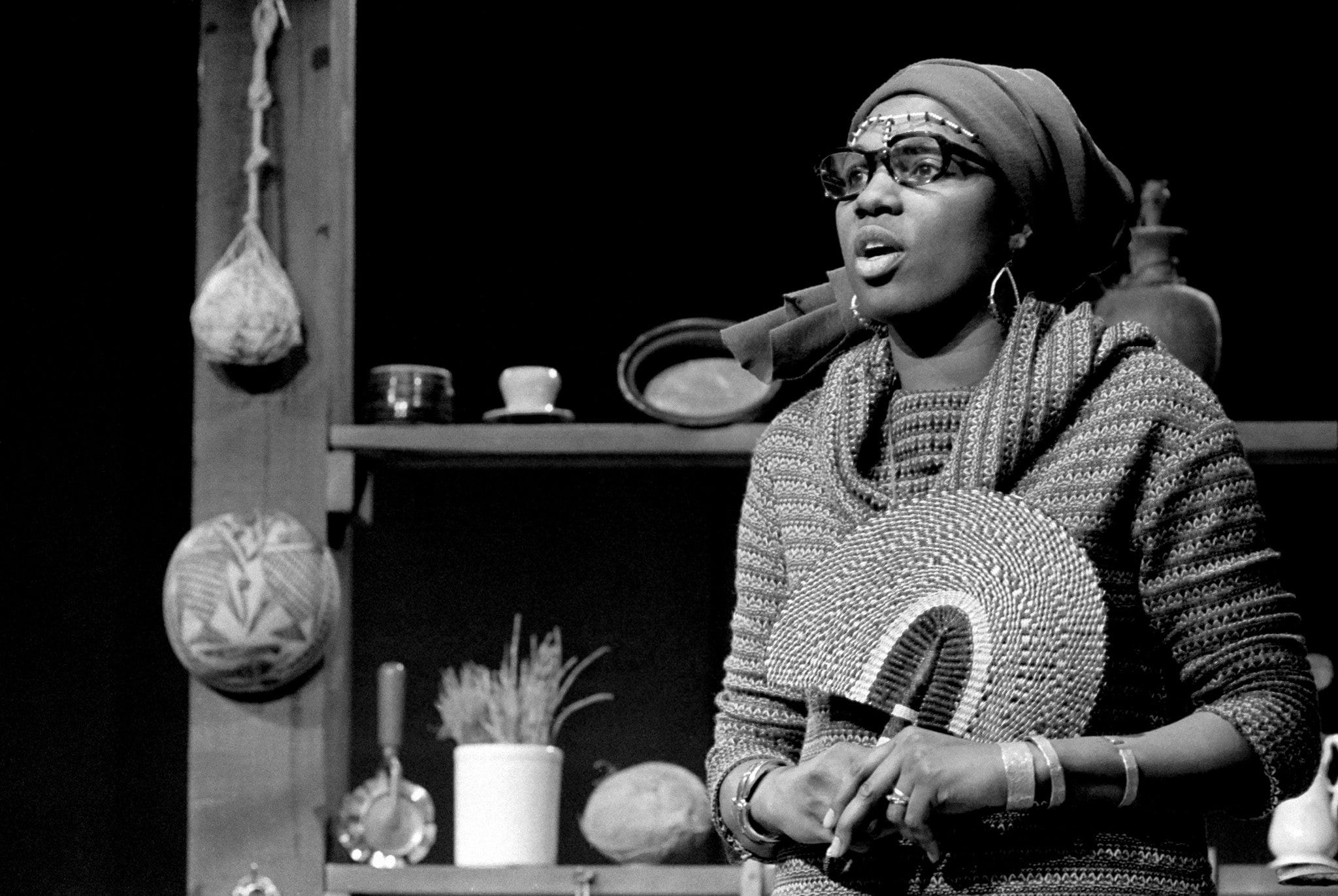
Vibration cooking. Cooking by instinct. By feel. By the accumulated knowledge of hands that had made this dish before and knew what it needed without consulting a formula.
The system had a specific image of the Black woman in the kitchen. The Mammy. The servant. The knowledge without the authority. The labor without the dignity.
Grosvenor took that knowledge and claimed it as intellectual and cultural inheritance.
She said: I cook with vibration. I don’t measure. I know. That knowing — confident, specific, culturally located, unapologetic — is the same interior world the Caribbean children drew from in that London classroom.
She wrote about being Geechee. About the direct African cultural retentions preserved in the Sea Islands. The language. The food. The spiritual practice. The way of organizing time and community that came from somewhere specific on the other side of the Middle Passage and survived.
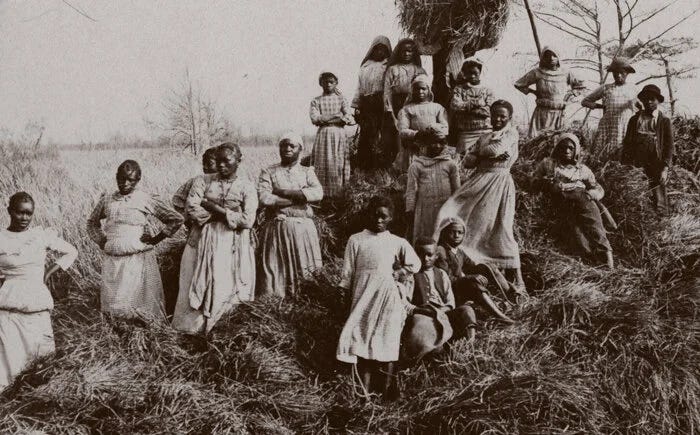
A living counter-tradition. A people who had held onto something the system had been trying to take for four hundred years. Still holding it. In the kitchen. In the recipes that didn’t need to be written down because they were in the hands.
She kept writing anyway. Kept cooking. Kept claiming the full territory of what she knew.
The real thing.
These are not exceptions to the system’s operation.
They are evidence that the system’s operation is never complete.
Because the replacement is always partial. The colonization of perception is always contested. Because the interior world — the specific sensory and emotional and cultural memory of who you actually are and where you actually come from — does not disappear just because the system installs its preferred imagery over it.
It goes underground. It finds forms the system doesn’t know how to manage yet.
It emerges in a novel about white men in Paris written by a Black man from Harlem who refuses to be reducible.
It emerges in a song about four women that radio stations ban because the interiority is too specific to be contained.
It emerges in a baritone that carries both the American folk tradition and the international workers’ movement in the same instrument.
It emerges in a cookbook written by a Geechee woman who cooks with vibration and knows things that cannot be measured.
It emerges in a film made in Burkina Faso by a historian who decided that repossessing his continent’s images was more urgent than completing his PhD.
It emerges in a classroom in London where children newly arrived from the Caribbean draw flowers and water with the sureness of people who have not yet been told to draw from the outside in.
It emerges in a child in Chicago who puts his arm next to his sister’s and feels nothing but kinship because the system has not yet finished its work on him.
The system is patient.
But so is the interior world.
It is still there.
— — —
VIII. THE BUILDERS BUILDING STILL
The system is operating as designed.
It was designed in 1896. In 1915. In 1934. When Sessue Hayakawa’s stardom proved that desire does not naturally organize along racial lines and the system responded by eliminating the evidence. When the Black Arts Movement’s distribution networks were dismantled. When Fred Hampton was assassinated and the film about him became impossible for decades. When the chicken thief became Precious.
When Wesley Snipes built the foundation of the most lucrative franchise in cinema history and was separated from what grew from it at the precise moment of its greatest value.
When Julie Dash spent ten years making a masterpiece outside the system and watched her visual language become the foundation for someone else’s harvest without credit.
When Ava DuVernay took Caste to Hollywood and the studios said no because the film names the architecture they are paid to maintain.
It was designed to grind slow.
It was designed to grind still.
And it has.
But here is what the design did not account for.
The interior world.
The specific, irreducible, particular interior world of people who were processed by the system and did not come out the other side as the system needed them to. Who found — in the kitchen, at the piano, on the page, behind the camera, in the classroom in London, in the arm placed next to a sister’s arm — something the system could not fully reach.
Not because the system didn’t try. It tried with everything it had. It tried with the depression it generated in the people it needed to defeat. With the mental health costs it extracted as the price of resistance. With the slag it produced in the forging of iron personalities that refused to be anything other than what they were.
It tried. And the interior world survived anyway.
Not triumphantly. Not without cost. Not in a way that allows us to look away from what the grinding extracted from the people who carried the counter-tradition forward through their own darkness.
But it survived.
Gwendolyn Brooks’ Lincoln West walked home from that theater happy. Not because the white man’s gaze had been defeated. Because in the middle of the degradation one word had slipped through that was accidentally true. The real thing. He was. And he knew it.
— — —
I never noticed the difference in skin tone between me and my younger sister.
I know that now for what it was.
Not innocence. Not the absence of perception. The presence of an uncolonized perception. A perception that had not yet been handed the system’s evaluative framework and told to apply it to the people it loved.
That is not a childhood memory.
That is a standard.
The standard against which everything the system has done to Black imagery must be measured.
Not: is this film well made. Not: is this representation positive or negative. Not: does this win awards.
But: does this film see the way a child sees before the conditioning arrives. Does it draw from the interior. Does it know its subjects the way Kaboré knew the Mossi Kingdom. The way Grosvenor knew her kitchen. The way Brooks knew Lincoln West. The way the Caribbean children in London knew the specific quality of Caribbean light before the English school system had time to replace that knowledge with its preferred imagery.
Does it see from the inside out. Or does it see from the outside in — arriving at the dark Black body the way the white man arrived at Lincoln West in the theater, needing it to mean something specific, needing to find in it the confirmation of what the system requires confirmed.
That is the test. Not the only test. But the first one.
— — —
The mill is grinding slow.
But the builders are building still.
Gaston Kaboré returned from Paris to Burkina Faso to repossess his continent through images.
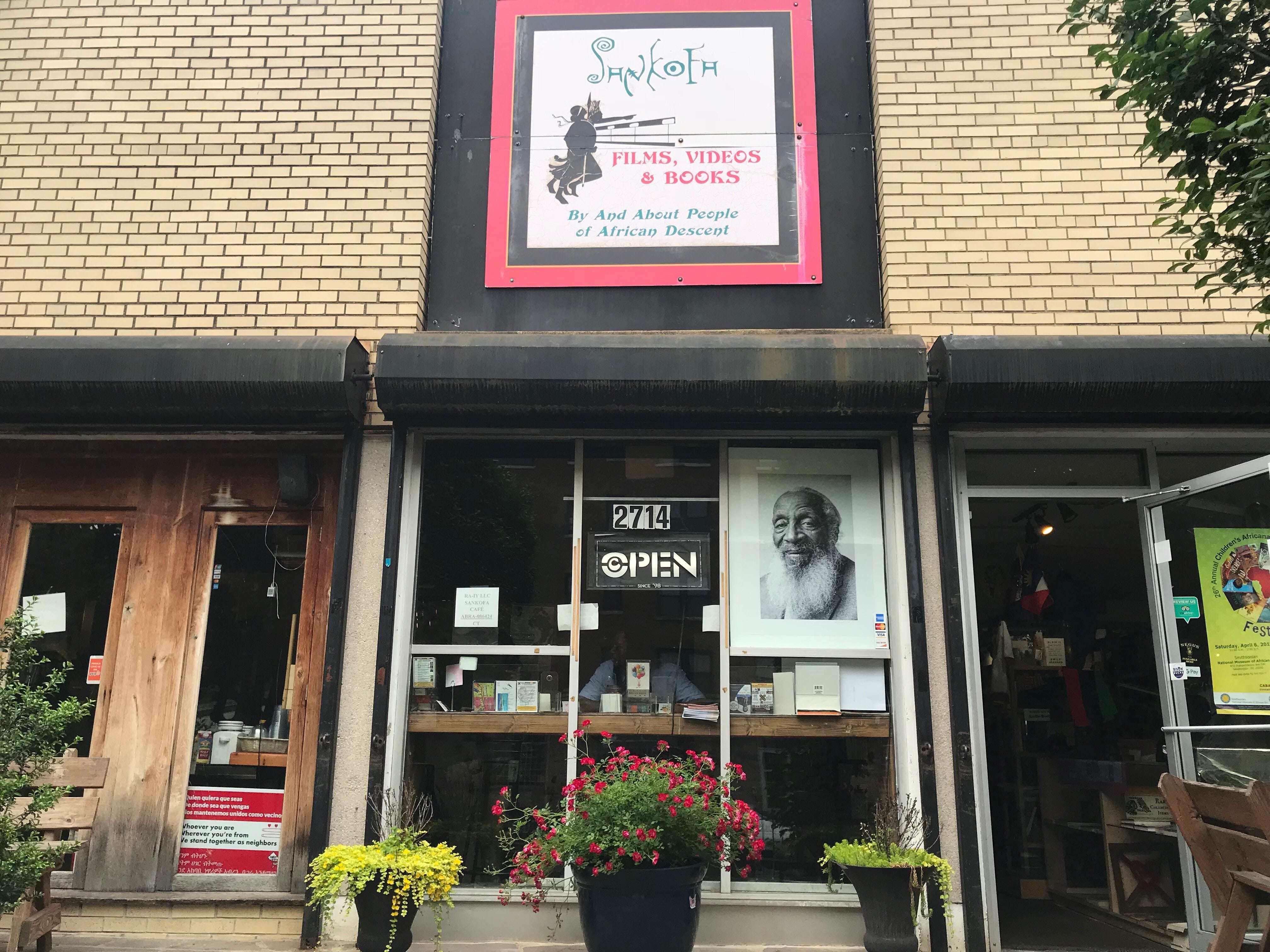
Haile Gerima built Sankofa Video and Books in Washington DC. A physical space. A community institution.
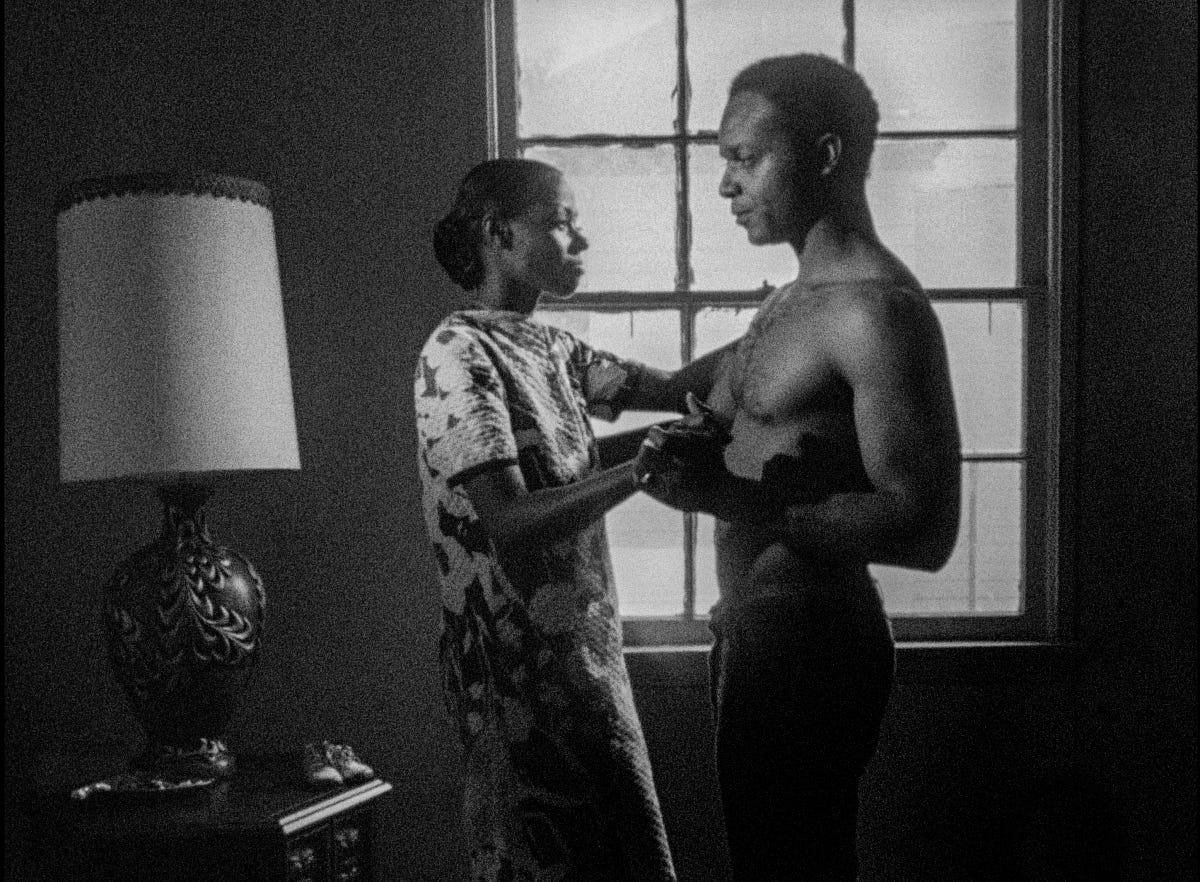
Charles Burnett made Killer of Sheep for eleven thousand dollars. A film about Black working class life in Watts rendered with the specific loving attention of someone drawing from the inside of his own experience.
Julie Dash spent a decade financing Daughters of the Dust. She made it anyway.
Ava DuVernay built Array. She built the conditions Caste required when the studios said no.
Wesley Snipes held the vision of Wakanda for thirty years and refused to compromise it.

Fred Hampton’s mother cooked food for striking workers in Maywood and understood from the factory floor that the mill grinds everyone the same.
Verta Mae Grosvenor wrote her recipes down without measuring because the knowledge was in her hands.
Nina Simone stood at a piano and played.
James Baldwin picked up a pen.
Paul Robeson opened his mouth and sang.
Gwendolyn Brooks wrote a poem about a boy in a theater who took the only true word in a sentence full of lies and made it his own.
And in a London classroom children newly arrived from the Caribbean drew flowers and water from memory with the sureness of people who had not yet been told to draw from the outside in.
— — —
This is not a conclusion.
The system is still operating as designed. The mill is still grinding. The awards envelope still opens on schedule. Fanon still has no American distributor. The grammar Griffith built is still running underneath every screenplay that requires the Black radical to die beautifully in the third act.
What this is instead of a conclusion is a statement of what the work is and why it matters.
The work is building the conditions that allow the uncolonized perception to recognize itself.
Not reforming the system. Not appealing to the system’s better nature.
Building the conditions.
The community institution. The streaming channel that reaches the global Black diaspora without the Hollywood intermediary deciding what gets through. The film festival that has been running since 1982. The screening in a sold-out room where an audience found Fanon and stayed long after the credits because what Barny had put on screen opened something that needed to be spoken.
That room was not built by the system.
It was built by the people who understood that the system will not build what the community needs.
So the community builds it.
Film by film. Audience by audience. Institution by institution. Child by child who draws from the inside of their own experience before the replacement arrives. Generation by generation who learns — from Brooks, from Baldwin, from Simone, from Robeson, from Grosvenor, from Kaboré, from Hampton, from Marley, from Dash, from DuVernay, from the grandmothers whose recipes were in their hands — that the interior world is real and it is theirs and the system’s inability to fully possess it is the permanent crack in the architecture through which everything worth building eventually comes.
The real thing has always known what it is.
After all.
— — —
FURTHER READING
Films referenced in this essay:
Wend Kuuni / God’s Gift (dir. Gaston Kaboré, Burkina Faso, 1982) — Available free on Kanopy
Daughters of the Dust (dir. Julie Dash, 1991) — Streaming platforms
Killer of Sheep (dir. Charles Burnett, 1978) — Criterion Channel
Precious (dir. Lee Daniels, 2009) — Streaming platforms
Birth of a Nation (dir. D.W. Griffith, 1915) — Archive.org
The Cheat (dir. Cecil B. DeMille, 1915, starring Sessue Hayakawa) — Silent film archives
Body and Soul (dir. Oscar Micheaux, 1925, starring Paul Robeson) — Library of Congress archives
Blade (dir. Stephen Norrington, 1998) — Streaming platforms
Caste (dir. Ava DuVernay, forthcoming) — Independent release
Books — Theory and History:
Gwendolyn Brooks, Blacks (Third World Press, 1987) — includes The Life of Lincoln West
James Baldwin, The Fire Next Time (Dial Press, 1963)
Verta Mae Grosvenor, Vibration Cooking (Doubleday, 1970)
Isabel Wilkerson, Caste: The Origins of Our Discontents (Random House, 2020)
Achille Mbembe, Necropolitics (Duke University Press, 2019)
Donald Bogle, Toms, Coons, Mulattoes, Mammies, and Bucks (Continuum, 1973)
bell hooks, Black Looks: Race and Representation (South End Press, 1992)
Manthia Diawara, African Cinema: Politics and Culture (Indiana University Press, 1992)
Martin Duberman, Paul Robeson: A Biography (Knopf, 1988)
Daisuke Miyao, Sessue Hayakawa: Silent Cinema and Transnational Stardom (Duke University Press, 2007)
Where to find these films:
Blacknuss.tv — curated global Black diaspora cinema: blacknuss.tv
Kanopy — free through public libraries: kanopy.com
Criterion Channel — criterionchannel.com
California Newsreel — African and diaspora cinema: newsreel.org
Array Now — Ava DuVernay’s distribution platform: arraynow.com
Black Light Film Festival archive — contact through blacknuss.tv
— — —
NOTES
1. The Life of Lincoln West, Gwendolyn Brooks, Family Pictures, Broadside Press, 1970.
2. Watermelon Contest (Edison, 1896); Chicken Thieves (Edison, 1897); Nigger in the Woodpile (Edison, 1904). Documented in the Library of Congress Edison film catalog.
3. The Birth of a Nation, dir. D.W. Griffith, 1915. Woodrow Wilson’s White House screening, February 18, 1915.
4. The Cheat, dir. Cecil B. DeMille, Paramount, 1915. See Daisuke Miyao, Sessue Hayakawa: Silent Cinema and Transnational Stardom, Duke University Press, 2007.
5. The Motion Picture Production Code, enforced from 1934 under Joseph Breen. Its prohibition on miscegenation is explicit in the text of the Code.
6. Blade, dir. Stephen Norrington, 1998. Box office figures from Box Office Mojo. Snipes earnings from court documents related to New Line Cinema lawsuit and tax evasion proceedings.
7. Daughters of the Dust, dir. Julie Dash, 1991. The Lemonade visual language controversy was widely discussed in 2016.
8. Caste, dir. Ava DuVernay. Based on Isabel Wilkerson, Caste: The Origins of Our Discontents, Random House, 2020.
9. Paul Robeson’s passport was revoked by the US State Department in 1950 and restored in 1958. See Martin Duberman, Paul Robeson: A Biography, Knopf, 1988.
10. Slave Mill, Damian Marley, from Distant Relatives, 2010, recorded with Nas.
11. Wend Kuuni, dir. Gaston Kaboré, 1982. Winner of the 1985 César Award for Best French Language Film. Available on Kanopy.
— — —
Floyd Webb is the founder of the Black Light Film Festival, established 1982, and the curator of Blacknuss.tv — a streaming channel dedicated to global Black diaspora cinema. He has been building the alternative infrastructure for fifty years.
https://celltherapy.substack.com/p/why-white-people-wearing-jordans